

Blueprints, Bugs, and the Quiet Weight of a Product
I keep coming back to the same idea: good software is not decoration. It has weight, load, rooms, exits, and consequences.
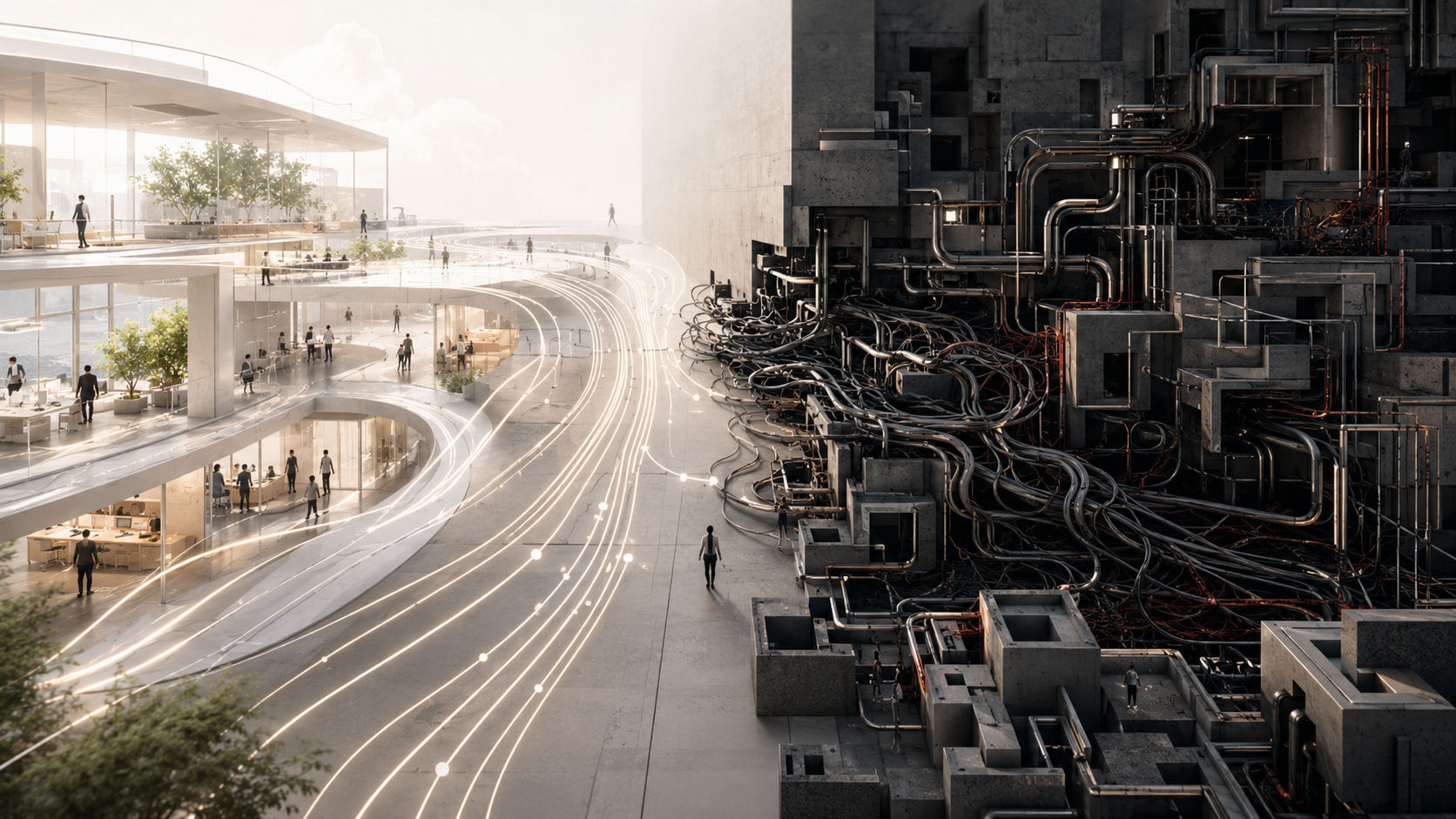
I did not begin my career thinking software and architecture had much to do with each other. That connection came later, after enough projects had gone from clean idea to real business pressure. Somewhere in that process I started seeing screens less like pages and more like rooms. People enter them, make decisions, leave traces, and trust that the structure will hold.
That may sound a little dramatic, but it is true. A product carries weight. A workflow carries responsibility from one person to another. A number on a dashboard becomes the reason someone approves a claim, delays a shipment, questions a customer record, or changes a plan. When the system is careless, the business feels it. Not always loudly. Sometimes just through friction.
So now, when I look at a product, I ask boring questions first. Where does responsibility move? What should be remembered? What should never cross a tenant boundary? What will someone need to prove later when the conversation is not friendly anymore? These are not glamorous questions. Honestly, they are the kind of questions that keep a platform from becoming a beautiful mess.
Architectural thinking helps because it respects structure before decoration. Boundaries matter. Circulation matters. Load matters. Future expansion matters. A building can look impressive and still be hard to live in. A SaaS product can look modern and still punish the team every time the business changes.
The tricky part is that users do not always see the architecture. They feel it. They feel it when onboarding is smooth, when permissions make sense, when reports match reality, when a workflow does not collapse because a new role was added. That feeling is not magic. Someone paid attention before the pressure arrived.
This is the kind of product work I trust now. Less noise. More consequence. Less decoration pretending to be strategy. More structure that lets people do serious work without thinking about the scaffolding underneath. Maybe that is why I still like the word architecture. It reminds me that good software should give people a place to stand.
Need this kind of thinking inside a real platform?
I take on select senior engagements around multi-tenant architecture, ERP, AI workflow, and operational software that has to hold up in production.
Start a Conversation